The Fidget Chair
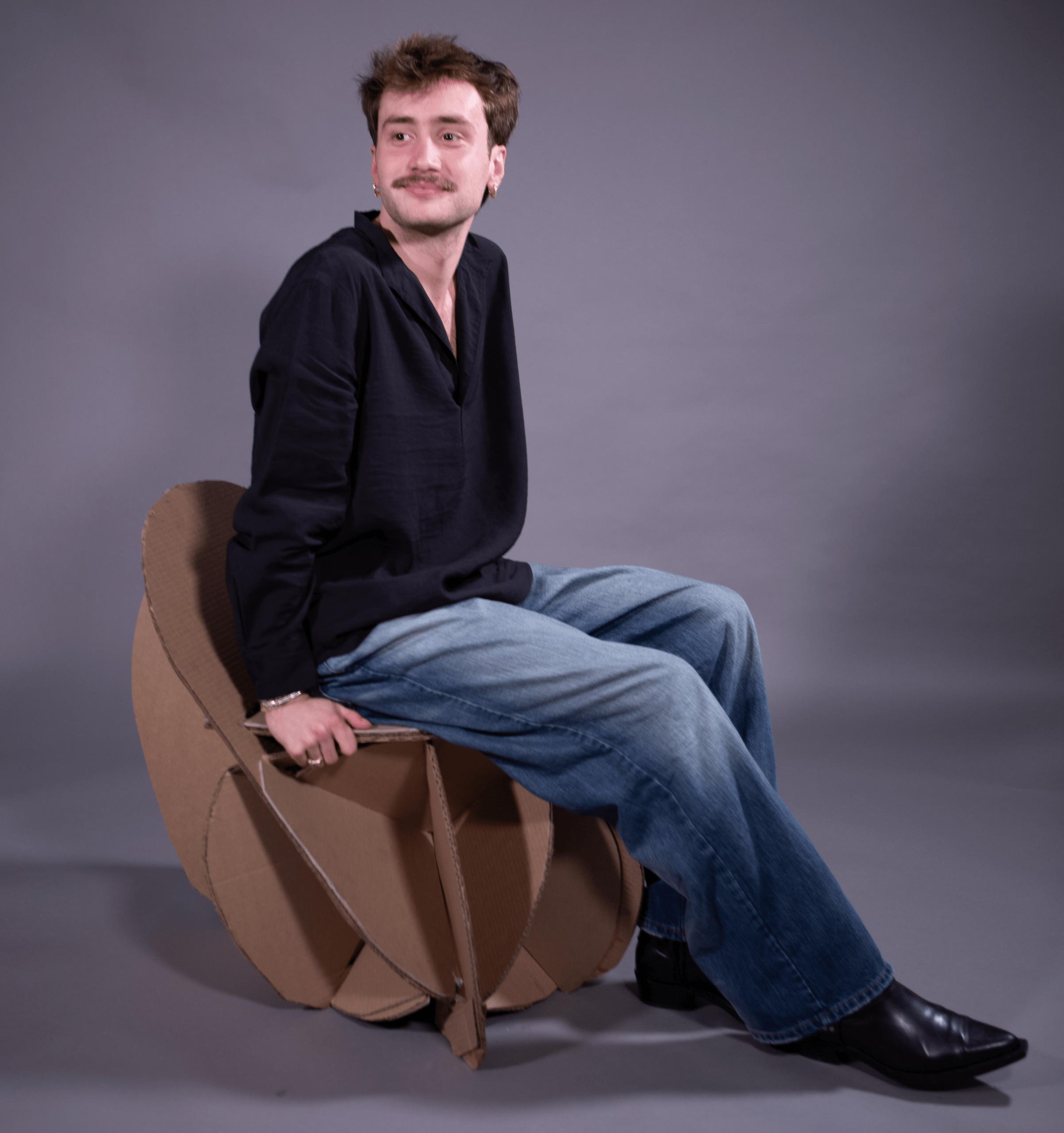 The Fidget Chair is a task chair designed to help users cope with stress and allows movement to stay focus while reading, working or simply relaxing.  CONCEPTMy intent was to design a versatile chair that helps users with ADHD maintain focus and accommodate movement. The Fidget Chair was developed after designing a spherical form, which highlights mobility and enables users to use it as either a stationary seat or for gentle rocking. RESEARCHStudies from UC Davis Health show that people fidget when bored, stressed, excited, or intensely thinking. While sitting, movement tends to help people have longer attention spans and maintain emotion. PRECEDENTS  Polar coordinates represent a system distinct from Cartesian coordinates. In this system, points on a plane are defined using a fixed reference point, which is known as the pole. Instead of using distance along axes, polar coordinates describe a point by it’s length from the pole and the angle it makes with a reference direction. This method allows for the representation of curves and circles. MATERIAL MANIPULATION   The Fidget Chair incorporates three distinct cardboard manipulation techniques. It utilizes Slotting to connect the circles, forming a spherical shape for the chair. Jointing is utilized for the side supports and backrest components to hold the chairs form. Finally, Laminating is applied to enhance the strength and support necessary to bear the weight of the human body. DESIGN DEVELOPMENT STUDIES    Building the cardboard chair was an intense yet rewarding experience. It started with material manipulation studies that inspired the concept of The Fidget Chair, defined by its unique sphere-like shape achieved through slotting. To improve functionality, I added side and back supports using joint pieces slotted into the sphere edges for stability and lumbar support. The backrest’s uneven support joint edge allows for gentle rocking, enabling comfortable fidgeting. Finally, I slotted the seat into the backrest, resting it on the sphere edges to create a practical, inviting space for users to sit. DESIGN SOLUTION   To design the Fidget Chair, I started by researching the seating body dimensions of both men and women. By analyzing the mean, median, and mode of the key measurements, I focused on the range from the 5th percentile of men’s dimensions to the 95th percentile of women’s dimensions to determine the average body size. This makes the chair accessible to most users. After numerous trials and iterations, I then created a sphere-like shape using a slotting technique, which formed the chair’s core design. However, after creating the chair, the sphere-like shape emphasized movement, which made it difficult to build a multifunctional chair rather than a typical stationary one. From there, I focused on developing the rocking motion and ensuring the backrest provided enough support for fidgeting and proper weight distribution. This way, users can sit in the chair regularly or use their legs to rock it gently. 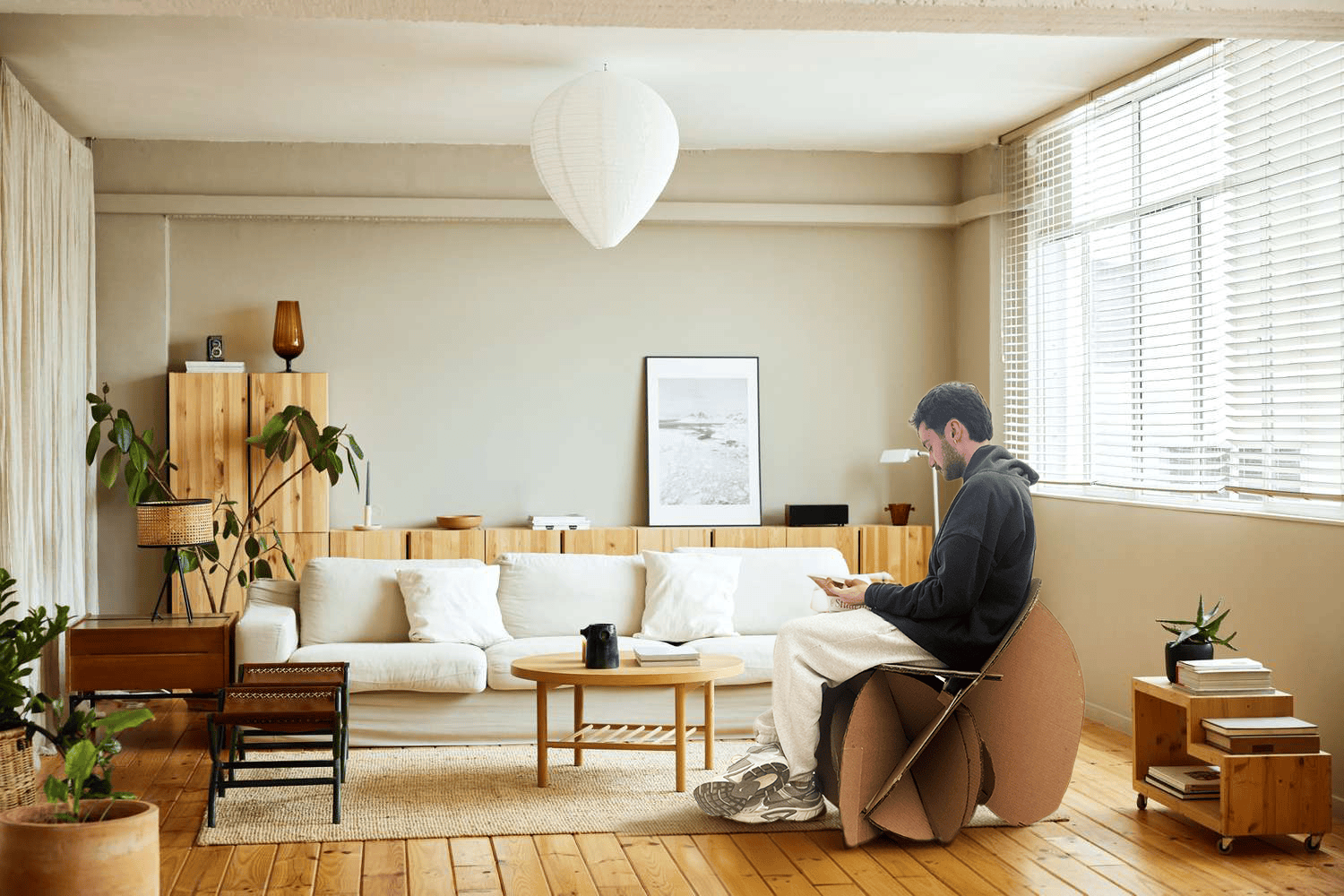 |

THE TREFOIL CHAIR
The Trefoil Task Chair concept is a compact easily assembled task chair created by slotting, braiding, laminating, and folding cardboard that changes what sitting is for you CONCEPT The Trefoil is a task chair that’s designed to make you get
THE TREFOIL CHAIR
The Trefoil Task Chair concept is a compact easily assembled task chair created by slotting, braiding, laminating, and folding cardboard that changes what sitting is for you CONCEPT The Trefoil is a task chair that’s designed to make you get

The Fortune Chair
The Fortune Chair is designed as a comfortable reading and lounging chair that encourages users to relax. CONCEPT I wanted to create a chair that felt just as comfortable for reading and lounging as it did for sitting upright. I
The Fortune Chair
The Fortune Chair is designed as a comfortable reading and lounging chair that encourages users to relax. CONCEPT I wanted to create a chair that felt just as comfortable for reading and lounging as it did for sitting upright. I

Reclined Reflection
Reclined Reflection is a meditative space that utilizes the reflection of the sunlight on water to create caustics for people to observe and experience serenity. We were asked to create a spatial installation near the waterfront next to Chelsea Piers.
Reclined Reflection
Reclined Reflection is a meditative space that utilizes the reflection of the sunlight on water to create caustics for people to observe and experience serenity. We were asked to create a spatial installation near the waterfront next to Chelsea Piers.

Sound Portal
Sound Portal is an immersive sound space that useswind to play strings within a wooden resonatingchamber while simultaneously cooling inhabitants. PhenomenaWIND can be used as a medium to feel an experienceand ENTROPY brings us awareness to oursurroundings to be more
Sound Portal
Sound Portal is an immersive sound space that useswind to play strings within a wooden resonatingchamber while simultaneously cooling inhabitants. PhenomenaWIND can be used as a medium to feel an experienceand ENTROPY brings us awareness to oursurroundings to be more

The Sunpath Pavilion
The Sunpath Pavilion is a small playground for relaxation that measures time and creates a dynamic effect of sunlight by tuning color filters and edges to the angles of sunlight throughout the day. . Phenomena: Analemma & The solar altitude
The Sunpath Pavilion
The Sunpath Pavilion is a small playground for relaxation that measures time and creates a dynamic effect of sunlight by tuning color filters and edges to the angles of sunlight throughout the day. . Phenomena: Analemma & The solar altitude

Maze Cube
As you step into Maze Cube , the mirrors reflect every angle of you, revealing your entire self without concealment. What you see is not just yourself but countless overlapping images of you. In this “maze” of mirrors, every step
Maze Cube
As you step into Maze Cube , the mirrors reflect every angle of you, revealing your entire self without concealment. What you see is not just yourself but countless overlapping images of you. In this “maze” of mirrors, every step

The Hudson Echo
The Hudson Echo infuses the natural acoustics of the Hudson River through its form. Its concrete exterior shell extends into the river to channel its ambient sound up throughout the interior space. Its shell and theater shaped rows help create
The Hudson Echo
The Hudson Echo infuses the natural acoustics of the Hudson River through its form. Its concrete exterior shell extends into the river to channel its ambient sound up throughout the interior space. Its shell and theater shaped rows help create

Boiling Point
A space for meditative mindfulness, physical wellness, and for immersive contemplation on the existential threat of climate change. The project uses cedar wood heated by a glass dome evaporating water to create a hot, humid, steam-room like experience on the
Boiling Point
A space for meditative mindfulness, physical wellness, and for immersive contemplation on the existential threat of climate change. The project uses cedar wood heated by a glass dome evaporating water to create a hot, humid, steam-room like experience on the

Sun Catcher
Sun Catcher is a dappling device that manipulates and harnesses the sun by creating a practical shaded space using biodegradable materials for the public on the lawn in Chelsea Piers. The task was to create an public installation for a
Sun Catcher
Sun Catcher is a dappling device that manipulates and harnesses the sun by creating a practical shaded space using biodegradable materials for the public on the lawn in Chelsea Piers. The task was to create an public installation for a

MICRO-HOUSING: THE ELDERLY WHEELCHAIR USER
The Medium1 Unit is designed to connect private accessible spaces with areas that encourage social interaction for elderly users. It incorporates smart home features like voice activated controls (doors), clerestories & niched railing, to help support the user’s mobile independence